

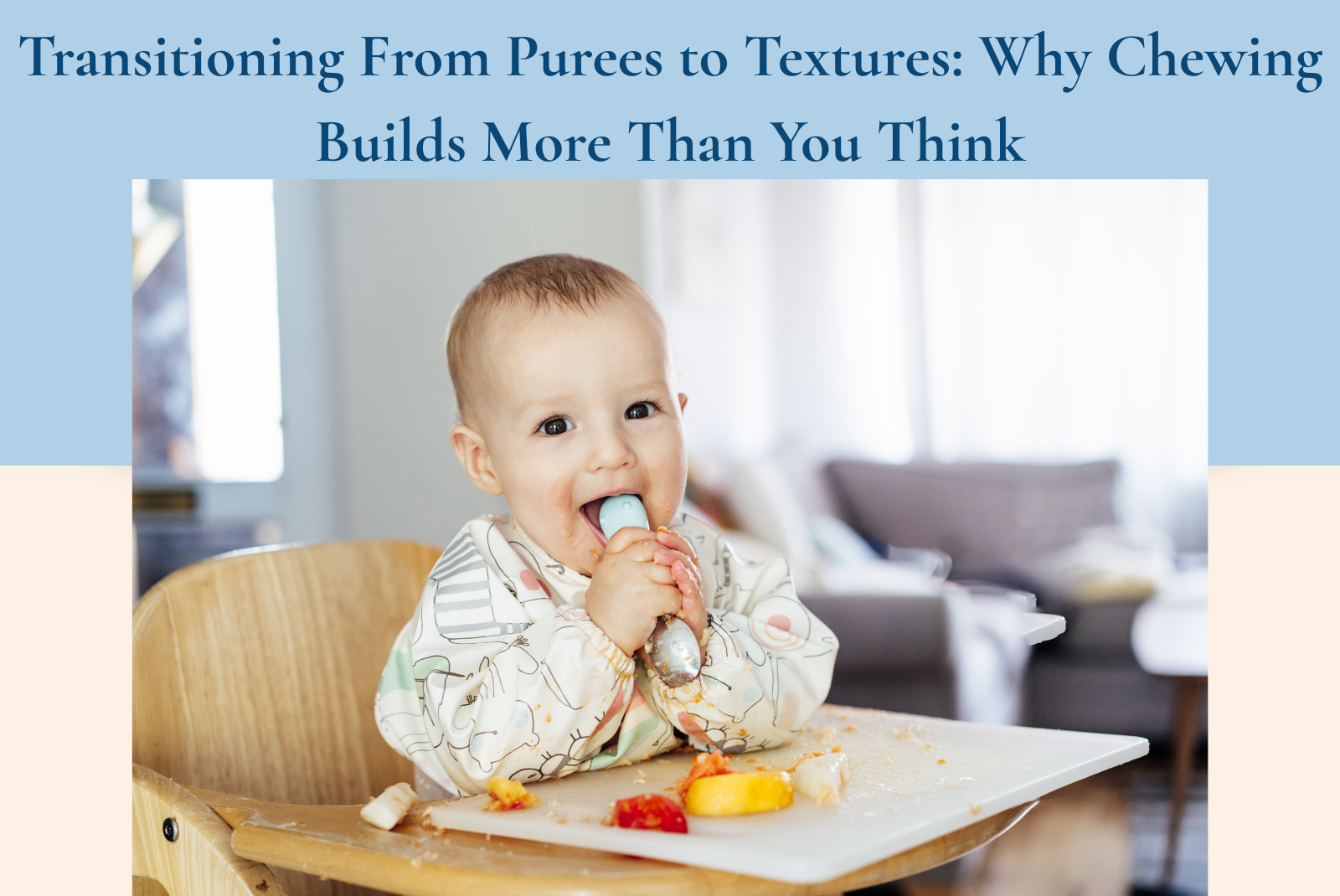
Moving your baby from purées to textured foods can feel nerve-wracking, especially when they gag or seem hesitant.
But this stage is about much more than introducing new foods. It’s about building oral strength, developing coordination, and supporting airway growth.
When your child learns to chew, they’re training the same muscles they’ll later use for speaking, swallowing, and even breathing properly.
The Hidden Benefits of Chewing
Every bite of textured food is a mini workout for your child’s mouth.
Here’s what’s happening when they chew:
- Tongue muscles push food side to side and upward, shaping the palate and helping widen the upper jaw.
- Jaw movements strengthen alignment and stability, setting the stage for proper facial growth.
- Lips and cheeks work together to keep food inside, supporting a closed-mouth posture.
- Breathing patterns synchronize with swallowing, teaching safe and efficient coordination.
Over time, this builds balance across the oral and facial muscles essential for nasal breathing and airway health.
When to Transition From Purees to Textures
Most babies are ready to start exploring new textures around 6–8 months, once they can:
- Sit upright with minimal support
- Show interest in food
- Move food around in their mouth
- Lose the tongue-thrust reflex
Why Staying on Purées Too Long Can Hold Development Back
Extended use of smooth purées can delay the strengthening of the tongue, lips, and jaw.
Without that resistance and movement, the mouth muscles don’t develop the coordination needed for:
- Proper swallowing
- Clear speech sounds
- Nasal breathing and airway support
Chewing is the gym for your child’s mouth.
Tips to Support a Smooth Transition
- Start with “mashable” textures. Think fork-soft fruits and veggies your child can squish.
- Let them explore. Self-feeding encourages confidence and oral coordination.
- Offer a mix of textures. Variety stimulates different muscle groups.
- Model chewing. Eat together so your child can mimic your movements.
- Watch, don’t rush. Gagging is a normal reflex. It’s how babies learn to manage food safely.
The Airway Connection
Chewing supports more than feeding skill. It physically helps shape your child’s airway space.
When the tongue presses to the roof of the mouth and the jaws move symmetrically, they stimulate growth in the mid-face and nasal passages.
Over time, this contributes to:
- Better nasal airflow
- Reduced risk of mouth breathing
- Healthier sleep patterns
In short: every chew supports better breathing.
A Gentle Takeaway
Transitioning to textures isn’t just about feeding milestones, it’s a step toward healthy airway and oral development.
Each small bite builds strength, coordination, and confidence.
If you’re unsure how to begin or notice persistent gagging, difficulty managing textures, or open-mouth posture, a feeding therapist or myofunctional specialist can guide you.