

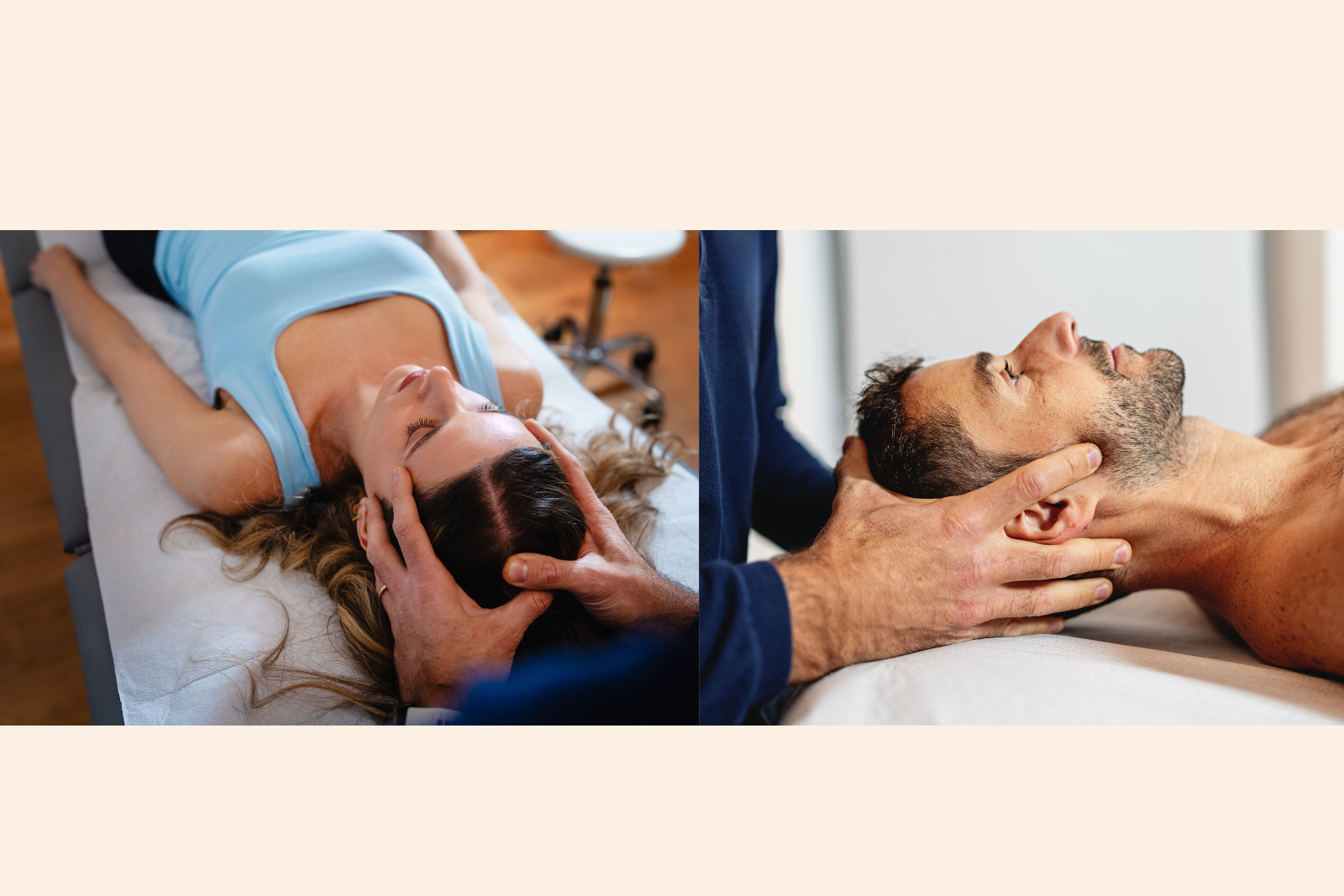
If your child struggles with mouth breathing, restless sleep, or difficulty nursing, you may have heard the term craniosacral therapy. While it sounds complex, craniosacral therapy (CST) is a gentle, hands-on approach that supports how the bones, muscles, and connective tissues of the head and neck work together and it can play an important role in airway health.
For parents navigating airway and oral function challenges, CST offers a way to release tension patterns that affect how your child breathes, swallows, and rests.
What Is Craniosacral Therapy?
Craniosacral therapy is a light-touch technique that focuses on the craniosacral system which is the membranes and fluid that surround the brain and spinal cord. Therapists trained in CST use gentle pressure (no more than the weight of a nickel) to help the body release restrictions in this system.
This gentle work helps balance the nervous system, relieve strain in the fascia (the body’s connective tissue), and promote optimal alignment of the cranial bones and jaw, all of which support better breathing and oral function.
How Craniosacral Therapy Connects to Airway Health
The airway is influenced by the structures of the skull, jaw, tongue, and neck. When tension, birth trauma, or muscular imbalance restricts those structures, the airway can narrow or function less efficiently.
Craniosacral therapy can help by:
- Releasing jaw and tongue tension:
Gentle work around the temporomandibular joint (TMJ) and tongue base can improve tongue mobility and resting posture, supporting nasal breathing. - Improving head and neck alignment:
The way a baby or child holds their head affects airway space. CST helps align the occiput and upper cervical spine, creating more freedom for the airway. - Supporting nervous system regulation:
Many children with airway restriction live in a state of chronic tension. CST activates the parasympathetic “rest and digest” system, promoting calm, rhythmic breathing and better sleep.
When CST May Be Helpful
Craniosacral therapy can be a supportive option for babies, toddlers, and older children experiencing:
- Difficulty breastfeeding or bottle-feeding
- Mouth breathing or snoring
- Chronic congestion or ear infections
- Head-turning preference or flat spots (plagiocephaly)
- Tension following tongue-tie release (frenectomy)
- Poor sleep quality or restless nights
It’s not a cure-all, but when used alongside airway-focused care, such as myofunctional therapy, bodywork, and oral-facial growth support. CST can make a significant difference.
CST and the Myofunctional Connection
Many airway-focused providers integrate CST with myofunctional therapy. The reason is simple:
If the cranial bones or fascial tissues are tight, it’s harder for a child to learn new oral patterns.
By gently loosening those restrictions, craniosacral therapy can make oral exercises and tongue-posture retraining more effective.
For example, after CST, a child may find it easier to keep their lips closed, tongue resting on the palate, and jaw relaxed which is the foundation for healthy airway function and facial growth.
What a Session Looks Like
During a session, your child will typically lie fully clothed on a soft table or in your lap. The therapist may place their hands under the head, back, or sacrum (tailbone) while observing subtle movements and rhythms in the body.
Most children find it deeply relaxing and some even fall asleep.
CST should always be gentle and pain-free. Parents are encouraged to stay close and participate, especially during infant sessions.
Finding a Qualified Practitioner
When choosing a craniosacral therapist:
- Look for training through the Upledger Institute or a reputable CST certification program.
- Ask about experience with infants and children.
- Coordinate care with your child’s airway team — pediatric dentist, myofunctional therapist, or bodyworker — for best results.
You can find practitioners by searching “craniosacral therapy near me” or checking the Upledger Institute’s practitioner directory.
Craniosacral therapy works best as part of a holistic approach to airway health. By releasing tension patterns and supporting natural alignment, it helps children breathe more freely, sleep more soundly, and develop stronger oral function over time.
At The Restful Tongue, our mission is to help parents understand the why behind their child’s symptoms so you can make calm, confident decisions for their growth and wellbeing.